
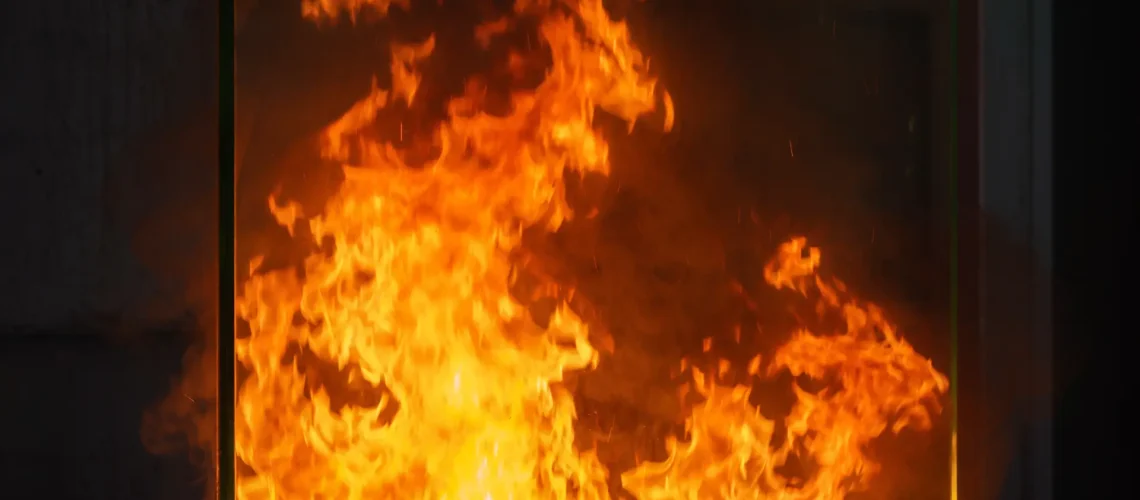
Summary: Fire-rated glass protects people, property, and building spaces by limiting the spread of flames, smoke, and heat while maintaining the transparency and natural light of modern commercial designs. Understanding building code requirements, fire-protective versus fire-resistive glass, performance ratings, and proper installation is essential when selecting glazing for a commercial project.
When you are designing for the safety of a commercial building, every component of a fire-rated assembly matters. Doors, walls, corridors, stairwells, and other areas are designed to slow the spread of fire. To aid them in this effort, they require specialized glazing that can withstand heat and help contain flames and smoke.
Fire-resistant and fire-rated glass provide critical protection while allowing architects and designers to maintain transparency and natural light throughout a building. There are differences between fire-rated glass products. Building owners, contractors, and project teams must understand code requirements, the differences between the different types of fire glass, performance ratings, and common applications before making a final decision on materials.
Understanding Fire-Rated Glass and Building Codes
Fire-rated glass is designed and tested for use in fire-rated assemblies. Building codes dictate where fire-rated glazing is required based on building occupancy, construction type, location of the glass, and the require rating of the surrounding wall or door assembly.
Since requirements can vary by project, it’s important to start with the building codes and fire codes and incorporate their requirements into a building’s design. Remember that the entire glazing assembly (not just the glass itself) should meet building code requirements.
Building codes may stipulate that fire-rated glass must be used in locations including:
- Fire-rated doors and frames
- Interior fire-rated walls
- Stairwells and exit corridors
- Smoke barriers and partitions
- Commercial storefront or curtain wall applications where required
- Windows and openings in fire-rated assemblies
- Areas where fire-rated glazing is specified by building design
Remember that requirements for glass vary by location and application, so double-check a product’s listing, rating, and installation system before selecting it for your project.
Fire-Protective vs. Fire-Resistive Glass
One distinction that trips up many designers and contractors is the difference between fire-protective and fire-resistive glass. Here’s the Glass Source short explainer to help you understand these two distinct products.
Fire-protective glass is designed to prevent flames and smoke from passing through to other areas for a specified period of time. Depending on the product and application, it may be used in doors, openings, and other locations where the code permits this type of protection.
Fire-resistive glassprovides an even higher level of protection. Not only does it limit the passage of flames and smoke into other areas of the building, it is designed to limit heat transfer as well. This further protects people, equipment, and other property from fire, smoke, and heat damage.
Here’s why this distinction matters: not every fire-rated product can be swapped for another. A product that provides the required protection in one application may not meet the requirements for another.
Performance Ratings for Fire-Rated Glass
The performance ratings for fire-rated glass is typically expressed in minutes. The minutes represent how long the glass can be expected to contain flames, smoke, and heat. Depending on the product and application, your design might require a 20-minute rated glass, a 45-minute, 60-minute, 90-minute, or 120-minute rated glass.
Other factors may affect the performance of fire-rated glass in your specific design. These might include flame and smoke protection, temperature or heat transmission, hose-stream performance, size limitations, frame and glazing system requirements, door or wall assembly requirements, and applicable listing and testing standards.
Where to Use Fire-Rated Glass
Building codes allow fire-rated glass to be used in a variety of applications. Here is where the Glass Source team most often installs fire-rated glass throughout the Twin Cities.
| Application | Location |
| Office Buildings | Rated corridors, stairwells, doors & partitions |
| Retail & Storefronts | Storefront windows, entryways |
| Healthcare Facilities | Walls, doors, other assemblies |
| Multi-Tenant Buildings | Common areas, corridors, stairwells, other locations |
| New Construction | Walls, doors, openings |
Professional Installation Matters, Too
Beyond choosing the right product for your application, you also need to select the right team to fabricate and install your fire-rated glass. The Glass Source team is your local experts in commercial glazing fabrication and installation. We can help you get the details right from the beginning to keep your project on track, pass inspections, and avoid costly replacement work.
If you’re planning new construction, a tenant build-out, remodel, or other commercial glass replacement, get in touch with us today to discuss your fire-rated glass options.
Fire-Rated Glass FAQs
What is fire-rated glass?
Fire-rated glass is specially designed and tested for use in fire-rated assemblies, helping limit the passage of flames, smoke, and, depending on the product, heat for a specified period of time.
What is the difference between fire-protective and fire-resistive glass?
Fire-protective glass is designed to limit the passage of flames and smoke, while fire-resistive glass provides a higher level of protection by also limiting heat transfer. The appropriate type depends on the building code and specific application.
What do the performance ratings for fire-rated glass mean?
Fire-rated glass is typically assigned a rating in minutes, such as 20, 45, 60, 90, or 120 minutes. The rating indicates how long the tested glazing assembly can provide its specified level of fire protection under test conditions.
Where is fire-rated glass commonly used?
Fire-rated glass may be used in commercial office buildings, storefronts, healthcare facilities, multi-tenant buildings, stairwells, corridors, doors, walls, and other openings where required by building codes or the building’s design.
Whether you need a quick windshield replacement, are planning a bathroom renovation with custom shower glass, or require a reliable partner for commercial glazing, Glass Source has you covered. With over 30 years of experience serving the Twin Cities, our team is dedicated to providing fast, professional, and custom glass solutions for your home, vehicle, and business.
Don’t let a crack or broken window slow you down. Reach out to our friendly team in Golden Valley today to get a quote or schedule your service.
Get in Touch: Ready to start your project? Visit our Contact Us page to request a quote or call us directly.
Stay Connected: Follow us for the latest updates, project showcases, and glass care tips: